“He was then and is today known for his collaborative spirit, pursuit of knowledge, innovation, and motivation for understanding the world's unsolved questions,” shares Rod Clifton, the Rush C. Hawkins University Professor Emeritus of Engineering.
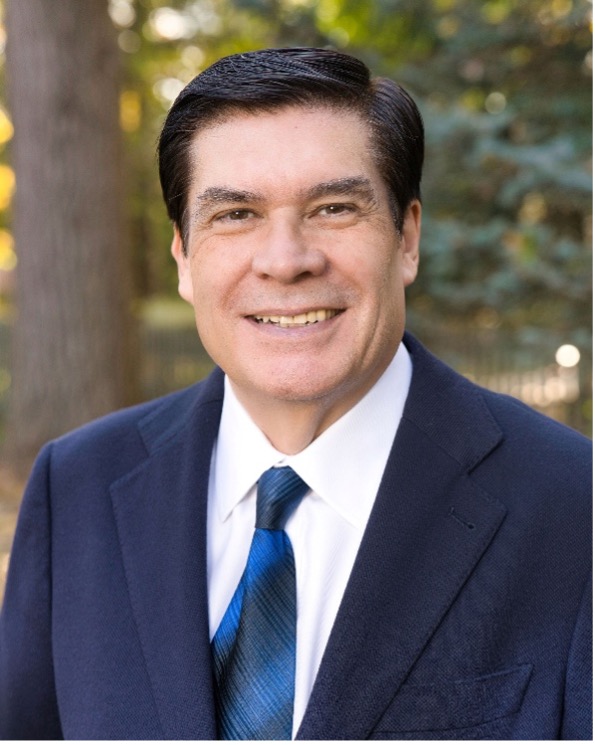
At Northwestern University, Espinosa holds appointments as the Walter P. Murphy Professor of Mechanical Engineering, Professor of Biomedical Engineering, and Director of both the Theoretical and Applied Mechanics Program and the Institute for Cellular Engineering Technologies. He was nominated for the Horace Mann Medal by Tejal Desai, Sorensen Family Dean of Engineering, and Clifton.
Building the Future One Atom at a Time
Leading Northwestern’s Micro and Nanomechanics lab, his team studies the mechanical behavior of natural and synthetic nanomaterials across scales, from nanoscale to macroscale, as well as developing micro/nano devices for materials research and personalized medicine.
By pairing traditional lab experiments with machine learning, Espinosa's team is accelerating the design of "smart" materials that can be precisely tailored for specific applications.
“His work in the design of micro- and nano-systems has truly advanced both fundamental and applied science, offering exciting applications ranging from batteries for sustainable energy and flexible electronics to the next generation of protective equipment,” says Desai.
Personalized Medicine at the Cellular Level
Espinosa’s research will also help define the doctor’s office of the future. His lab developed an AI-enhanced version of Nanofountain Probe Electroporation (NFP-E), a technology that uses electricity to deliver molecules into single cells, as well as the live-cell analysis microfluidic device (LCAD), which enables non-destructive, temporal intracellular sampling of enzymes from human cells. Together, these innovations have the potential to accelerate breakthroughs in disease diagnostics, gene editing, drug development, and cell-based therapies, advancing medicine toward treatments tailored to each patient’s unique biology.
A Scholar of Global Impact
Espinosa’s influence on the scientific community is notable. He currently ranks 77th in the world for citations in mechanical and aerospace engineering. With over 600 technical papers to his name, his work serves as a foundation for modern materials science. His most groundbreaking studies, ranging from the indestructible nature of carbon nanotubes to the complex architecture of "mother-of-pearl" in seashells, have been referenced by thousands of other researchers worldwide. This high level of engagement underscores how his theories are being used to build the next generation of materials and technology.
Beyond the Lab: Mentorship and Diversity
Beyond his research, Espinosa is invested in mentoring and inclusion. He has served as faculty mentor, organizer, and host of the Future Leaders in Mechanical and Aerospace Engineering, a national initiative that highlights the research of graduate students and postdoctoral fellows from underrepresented groups. He also serves on several national and international committees dedicated to advancing diversity among students and faculty in solid mechanics.
Professional Recognition and Honors
His contributions have earned recognition from institutions around the world. Espinosa is a member of the National Academy of Engineering, one of the most prestigious honors in the profession, as well as the Academia Europaea, the European Academy of Arts and Sciences, and the Russian Academy of Engineering. He is a corresponding member of the Academy of Athens and a Fellow of the American Academy for the Advancement of Science and the American Society of Mechanical Engineers, and was recently elected to the National Academy of Inventors.
His awards include the Prager Medal from the Society of Engineering Science, the Murray and Sia-Nemat Nasser Medals from the Society for Experimental Mechanics, the William D. Nix Medal from the Minerals, Metals, and Materials Society, and the Drucker Medal and Thurston Award from the American Society of Mechanical Engineers, among others. He currently serves as President of the Society of Engineering Science.
“Espinosa is a true leader in his field,” shares Clifton, his “work in design of micro- and nano-systems, in situ microscopy characterization of nanomaterials, and microfluidics for single cell manipulation and analysis have truly advanced his field.” His combination of research, service, and mentorship makes him the quintessential Horace Mann Medal recipient.