Q&A with Sabrina Tolppi '25

Taking root from an undergraduate independent project in the Tripathi Lab, spinout company  Lilac Biosciences develops RNA analysis products that help researchers gain deeper insights into RNA samples – from patient-derived samples to manufactured RNA therapeutics. We caught up with co-founder and CTO Sabrina Tolppi ’25 to discuss her startup journey, their flagship reagent kit, and the plans to scale the technology platform for broader disease research. 

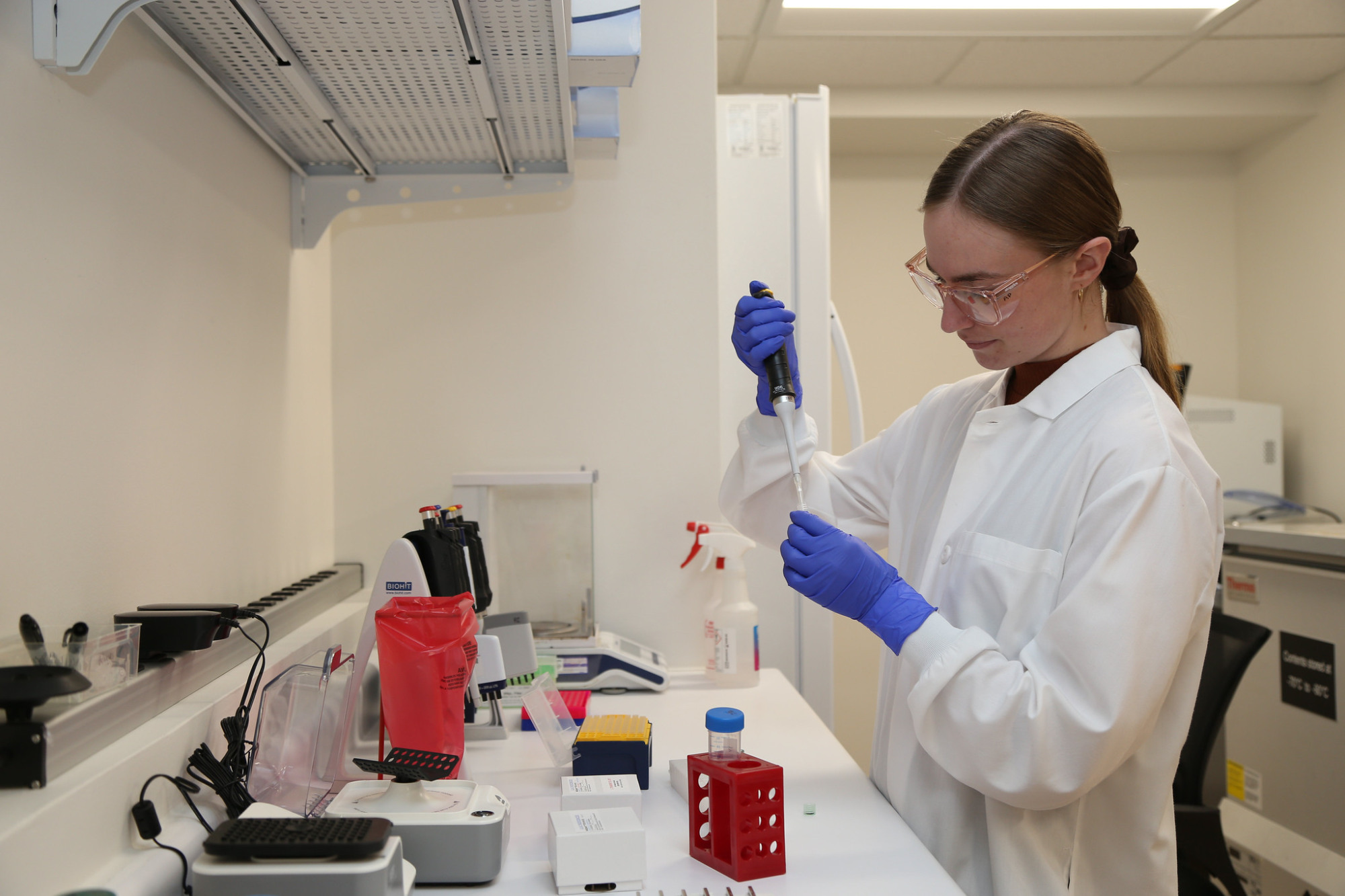
Sabrina Tolppi in lab

Q: Can you describe your role on a day-to-day basis, and how it has evolved as the team has grown?

In a startup, you have to wear a lot of different hats. I’ve done everything from operational tasks to communications to researching new products and product development. I have placed orders, talked to collaborators, and looked into novel applications. I've drafted patent materials and worked with legal to build out our IP. Additionally, I’ve done a lot with designing and executing experiments, especially critical experiments that are related to collaborations or product development. 

Before our team expansion, I did a lot of work on manufacturing as well. We had to develop tightly controlled protocols for making reagent kits that would yield the best customer experience. It was very interesting and rewarding to see the process all the way through, from initial development to market launch.

Our team’s recent expansion has allowed for more specialization. Currently, Lilac has a VP of Business, Director of Manufacturing, an R&D Scientist, and a CEO. In that new landscape, I’m excited to focus on product and IP portfolio expansion, tackling all sorts of technical problems.

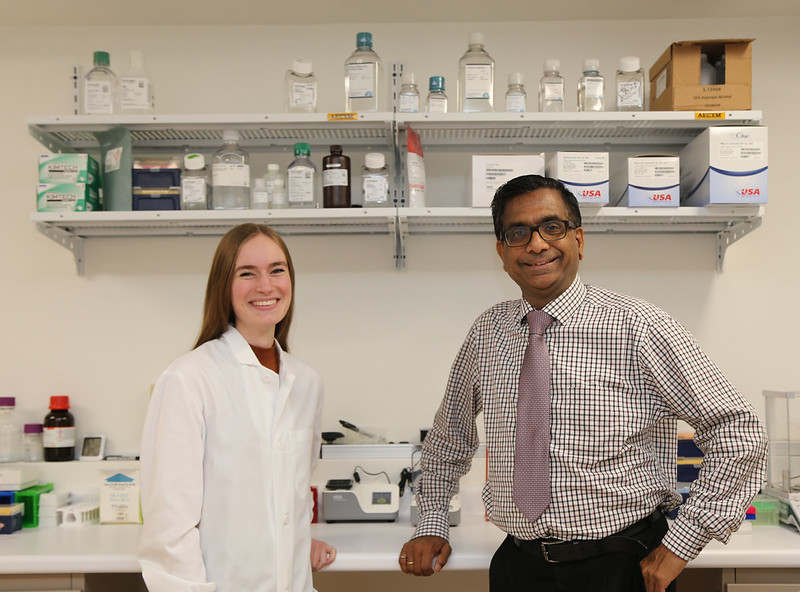
Tolppi and Tripathi

Q: What was the path from your early lab work with Professor Anubhav Tripathi to the launch of Lilac Biosciences? 

My freshman year, I was looking for research opportunities, because I knew I wanted something more than classes to engage with from a scientific perspective. At the time, I was unsure of what I wanted to do post-grad. I sent a few cold emails, one of which was to Professor Tripathi.

I met with him a few times, and then started in his lab, working with a Ph.D. student. Over the summer, I joined a team that was focused on automating NGS (next-generation sequencing) library preparation (preparing samples for sequencing) protocols. It was very intense and exciting; I built many of my assay development skills as part of that project. I worked with a few master’s students and also with Revvity, an industry collaborator with Professor Tripathi’s lab. I gained a lot of experience, from the industry side as well as from the academic side. That work was published and contributed to Revvity’s commercial offerings.

As that project was coming to an end, Professor Tripathi and other researchers across Brown were increasingly interested in RNA. We were all eager to work with RNA because it is a field that is rich with technological problems to solve. RNA is structurally and functionally diverse, heavily modified, degrades rapidly, and is exceptionally difficult to analyze. There is so much that is not yet understood about RNA biology. So we started with this idea of having accessible methods for analyzing modified RNA.

I worked directly with Professor Tripathi on this, brainstorming together, and I did a lot of the initial assay development for what would eventually become ModQuantTM, the name of our reagent kit we are currently commercializing. We knew that this was something that could greatly impact RNA research and clinical research involving RNA-based biomarkers. That's where the idea of Lilac as a company came from. The company gained traction and attracted funding, allowing us to expand and realize its vision. 

Classes will give you a good foundation, but if you only do classes, you’re not getting the full Brown experience. For me it was research that was most valuable, and then industry involvement through an industry-funded lab. It doesn’t matter as much what it is, as long as it meaningfully enriches your experience and shifts your perspective. Beyond that, engage with members of the Brown community who show you what is possible to achieve.

Sabrina Tolppi '25
 
Sabrina Tolppi

Q: What originally sparked your interest in this space, and how did you discover what you were most passionate about?

When I was applying to college, I was mostly thinking of medical devices, because that was what I had more exposure to in the biomedical space. But once I started looking into what different faculty members at Brown were doing, I realized that BME encompasses much more than just physical devices and mechanical design. Truthfully, when I was initially reaching out, I just wanted some experience. I was lucky to end up on the NGS automation project, which gave me exposure to a wide variety of research areas. The automation platform had challenging mechanical features, but I also needed to integrate those features with assay design (chemical and biological features). In that project, I was always most fascinated by reaction chemistries and biological workflows, and I think that passion continues to come out in my Lilac work.

Q: Where does Lilac Biosciences call home?

In the very beginning, ModQuantTM started as an independent project in the Tripathi Lab at Brown. Although Brown will always be Lilac’s origin story, we now have our own office and lab space at 285 Governor Street. It's within walking distance of Brown, so we're able to exploit that location to get the best of both worlds – we have our own environment, while also remaining a part of the Brown ecosystem.

Q: Lilac Biosciences was recently awarded an Innovation Voucher from Rhode Island Commerce. These vouchers support specific R&D projects that small Rhode Island manufacturers need to advance or reinvent their product offerings and remain competitive within their industry. How will you use this funding?

Last year, we started working with Rhode Island Life Science Hub, thanks to an Innovation Bridge grant. The purpose of that was to solidify our IP, and help with our patenting and licensing. This year, we learned of the Rhode Island Commerce Initiatives, including the STAC RI internship grant and the Innovation Voucher program. 

With the Innovation Voucher, we thought of it as a great opportunity to expand our product portfolio. RNA modifications are very diverse; there are more than 170 unique RNA modifications, and each can play its own role in cellular biology and disease. With this grant, our goal is to extend the ModQuantTM family to multiplex for different RNA modifications simultaneously. That requires a significant investment of R&D materials, time, and energy, but it’s undoubtedly worth it. In clinical research, measuring multiple RNA modifications achieves a better disease profile. This will really help us expand as a company and open new possibilities.

We are incredibly grateful to Rhode Island Life Sciences Hub and Rhode Island Commerce for these awards. We're very excited about what it’s helping us do.

Q: If you talked to current undergraduates to tell them how to take advantage of the opportunity they have right now, what would you say?

I would say do something outside of classes, something that you put a lot of time and energy into and are passionate about. Classes will give you a good foundation, but if you only do classes, you’re not getting the full Brown experience. For me it was research that was most valuable, and then industry involvement through an industry-funded lab. It doesn’t matter as much what it is, as long as it meaningfully enriches your experience and shifts your perspective. 

Beyond that, engage with members of the Brown community who show you what is possible to achieve. I never imagined this startup journey as a freshman sending cold emails, but my peers and mentors made me aware of that opportunity, and Brown gave me the chance to make it a reality.