Type I diabetes is a lifelong autoimmune disease where the body's immune system attacks and destroys the insulin-producing beta cells in the pancreas. Replacing insulin-producing beta cells made from manufactured human islet cells could restore the body’s ability to control blood glucose, but long-term survival and function of transplanted islet cells still need improvement. A major challenge is selecting a safe and practical transplant site that supports their full maturation into insulin-producing cells, engraftment, and longevity for long term therapeutic benefit. The subcutaneous space (under the skin) is attractive because it is accessible for minimally invasive delivery approaches, can be easily monitored with non-invasive techniques, and allows easy graft retrieval if needed. However, the site often provides poor oxygen and nutrient delivery, and is prone to scarring, so cells tend to starve and stop functioning within a few weeks to months.
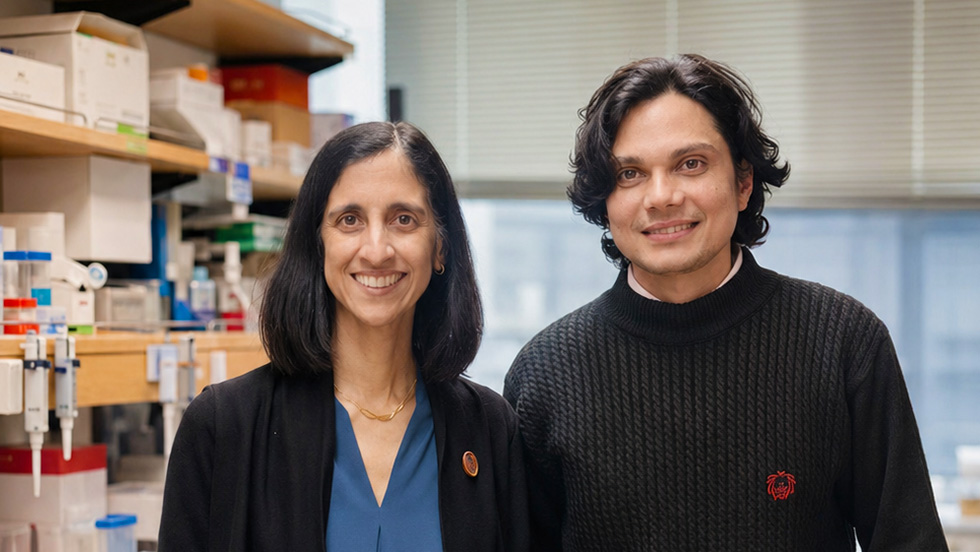
A team at Brown University’s School of Engineering has been awarded a three-year grant from Breakthrough T1D to change that. Led by Tejal Desai, Sorensen Family Dean of Engineering, the project advances a technology developed in her lab that, in preclinical studies, has demonstrated improved maturation, function and durability of the graft in the subcutaneous space. The grant will allow the advancement of these scientific discoveries by providing support for preclinical safety and cell/device manufacturing work to move the technology toward human clinical trials.
The technology developed in the Desai Lab is designed to provide a more biomimetic scaffold architecture to improve the engraftment of transplanted cells with the host environment which leads to better functionality and longevity of the graft. In preclinical studies, cell seeded scaffolds survived and remained functional for long durations, and the cells became more responsive to glucose over time.
“This grant from Breakthrough T1D is essential because it supports the critical translational activities needed to bridge the gap between lab research and clinical application,” said Desai. “The support allows us to take the necessary steps to move our biomimetic scaffold technology out of the lab and closer to the patients who need it most, ensuring that this therapy can be both safe and effective for real-world use.”
“We’ve long known replacing these cells can work; the hard part is keeping them alive and working,” said Bhushan N. Kharbikar, Ph.D., a senior scientist in the Desai lab. “Our data show that it is achievable, and this funding lets us carry it toward patients.”
Desai’s research applies microscale and nanoscale technologies to create new and improved ways to deliver medicines to target sites in the body and to enable the body to heal itself.
_____________________________________
About Breakthrough T1D: As the leading global type 1 diabetes research and advocacy organization, Breakthrough T1D helps make everyday life with type 1 diabetes better while driving toward cures.