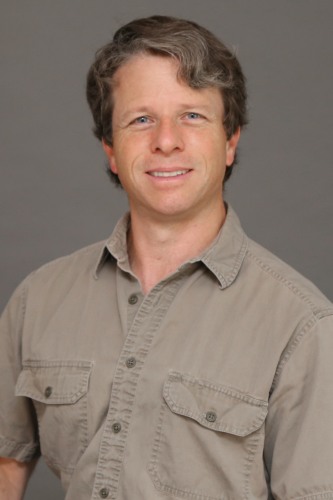
Brown University Professor Daniel Mittleman is one of a group of top researchers from universities and national laboratories across the country who have been selected by the U.S. Army Research Office to establish a five-year research center dedicated to advancing secure sensing, imaging and communications. The Center for Large Aperture Secure Sensing, Imaging and Communications, or CLASSIC, has been established at Rice University, with Mittleman’s $1.5 million portion of the $15 million award dedicated to his expertise in developing advanced antenna technologies for future wireless systems.
Led by Rice’s Edward Knightly, Professor of Electrical and Computer Engineering, the center combines experts in wireless networking, antennas, radar, artificial intelligence, circuits and physics to address growing demands on wireless systems. The research team will investigate how extremely large-scale antenna arrays (ELSAAs) can expand the capabilities of wireless systems in environments where today’s technologies are limited. Knightly said the center will give researchers the resources and collaborative framework to pursue advances that would be difficult to achieve through individual projects.
“This center gives us the opportunity to develop the science and engineering needed for a new generation of wireless networks with radically new capabilities, resilience and security,” he said.
At the center of the research are ELSAAs, which use thousands of coordinated antenna elements to precisely direct radio waves. Mittleman’s expertise — specifically in understanding the fundamental physical and scaling limits of ELSAAs, eavesdropping vulnerabilities, and physical-layer security and drone countermeasures — will help the team maintain reliable communications when signals are blocked or disrupted, while improving the ability to detect concealed objects and produce detailed images in challenging environments.
Several of the proposed research tasks build on results from Mittleman’s lab, notably their demonstration of the transmission of signals carrying data at rates up to 1 gigabit per second on a curved trajectory between an ELSAA transmitter and a small receiver. The curved path allowed the signal to avoid an obstruction lying along the line-of-sight path. “This result has led to a lot of inspiring proposals about how these large antennas can be used creatively in wireless systems,” said Mittleman.
The center will build on existing experimental platforms to validate antenna arrays ranging from hundreds to tens of thousands of radiating elements while working with academic, national laboratory and industry partners to help transition the technology into practical applications. To evaluate the technology under realistic conditions, the team will conduct both laboratory experiments and drone-based field trials. The tests will measure how the systems perform outside controlled laboratory settings.
Other co-principal investigators involved in CLASSIC include Ashutosh Sabharwal of Rice; Sensen Li of the University of Texas at Austin; Hou-Tong Chen of Los Alamos National Laboratories; Danijela Cabric of the University of California, Los Angeles; Josep M. Jornet and Tommaso Melodia of Northeastern University; and Willie Padilla of Duke University. Industry partners include Booz Allen, Intel, Keysight, Lockheed Martin, MITRE, Northrup Grumman, Qualcomm and Raytheon.
“The challenges we’re tackling require advances that span physics, hardware, communications and computing," Knightly said.