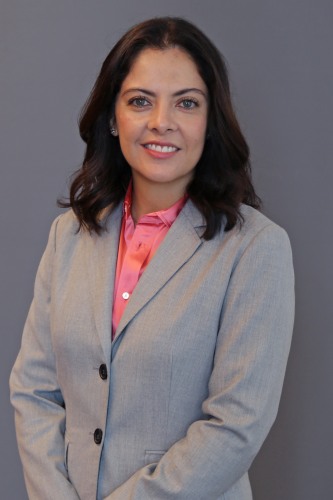
Brown has awarded 11 faculty members Research Achievement Awards as part of its annual program to honor preeminent scholars for their achievements, discoveries, and contributions. Thomas J. and Alice M. Tisch Assistant Professor of Engineering Monica Martinez Wilhelmus received an Early Career Research Achievement Award for her work investigating fundamental scientific questions at the intersection of environmental science, biology, and engineering. Her research focuses on fluid mechanics, integrating experimental techniques, remote sensing, and numerical modeling to investigate transport processes and mixing phenomena — advancing engineering solutions to critical societal challenges.
Every year, distinguished Brown scholars are nominated for Research Achievement Awards by their colleagues for conducting exceptional and transformative research. The 2026 selection includes 11 awardees from four categories: hospital-based research, humanities and social sciences, life sciences and public health, and physical sciences. Early Career Awards are offered every year; Mid-Career Awards and Distinguished Career Awards alternate each year. In 2026, Mid-Career Awards are being offered. Each winner receives a $5,000 research stipend and will be recognized with an award at the Celebration of Research this fall. The Research Achievement Awards are one of a number of Brown programs that recognize the importance of research by Brown faculty.
Martinez Wilhelmus studies transport phenomena at the intersection of fluid mechanics, oceanography, and biology — how mass, momentum, and energy move through environmental systems, and how organisms both shape and are shaped by the flows around them. In the Arctic, her lab develops algorithms that track individual ice floes across satellite imagery, treating the ice as a tracer for the ocean eddies beneath it and recovering the small-scale dynamics that current climate models cannot resolve. In the water column, she analyzes how swimming organisms interact with the fluid around them and translates those mechanisms into engineered systems, including Nereus, a krill-inspired underwater robot developed by her group. Most recently, her group has taken up breastfeeding as a physics problem, using reduced physical models to ask what drives milk flow, what impedes it, and what could make the practice more sustainable for women — a question of obvious consequence that has rarely been posed in mechanical terms. Her work has been supported by an Office of Naval Research Young Investigator award and by NASA, and she was selected for the National Academy of Engineering's 2025 Frontiers of Engineering Symposium.