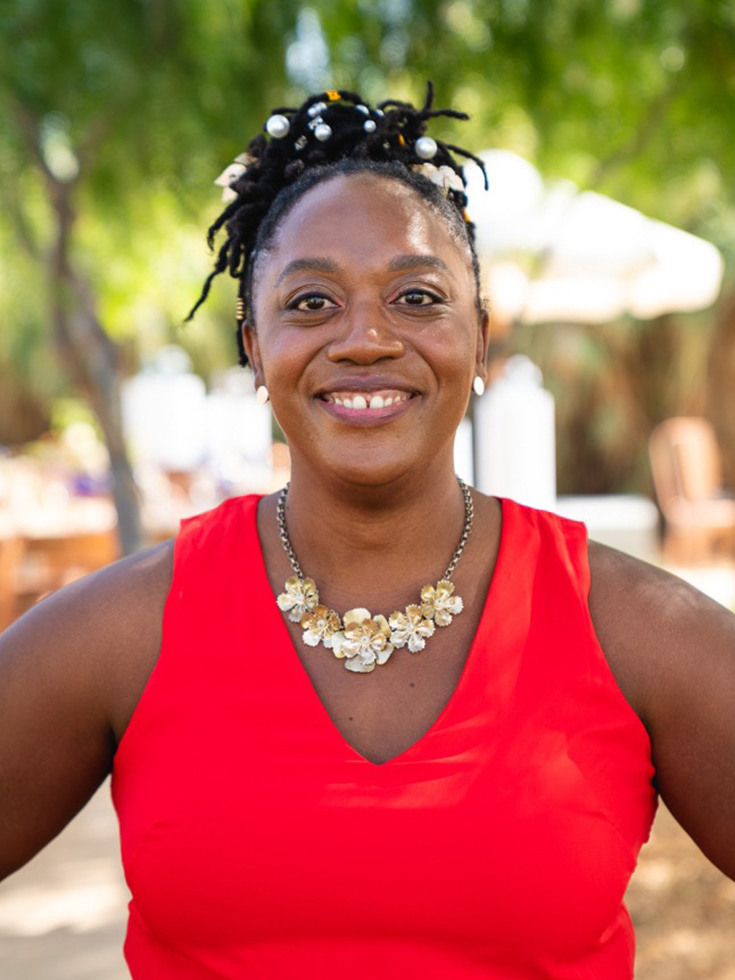
Tiffany Yizar ’07 received her Sc.B. in chemical and biochemical engineering from Brown University. Now, she leads Research and Development for Beauty and Wellbeing at Unilever, where she has spent the last nine years driving the innovation of beauty products. In this Q&A, Yizar reflects on how her time as an undergraduate at Brown’s School of Engineering equipped her with the technical foundation and problem-solving mindset that helped her to succeed in the global consumer goods industry.
Date
March 4, 2026
Q&A with Tiffany Yizar ’07
Engineering gives you incredible tools, but it’s your mindset — curiosity, resilience, and a willingness to learn — that shapes your trajectory. Brown helped instill that during my four years on campus and continues to inspire that in me as an alum, and I’m grateful for it.
Q: How did your journey in engineering begin, and what first drew you to the field?
I’ve always been curious about how things work and why. As a young child, my parents had to endure that curiosity as I reverse-engineered different recipes or took apart and reassembled common household appliances like remote controls. Engineering gave me a way to turn that curiosity into something practical and structured my thinking. It taught me how to break down problems and how to design, test, and implement solutions. Once I understood how to employ those powers in order to scale product solutions that improve everyday life, I was all in.
Q: Can you describe your current job and what a typical day looks like?
I lead R&D for Unilever's Beauty & Wellbeing business in North America, responsible for the haircare and skincare products for Dove, Tresemme, Vaseline, Nexxus and SheaMoisture. My days include partnering across functions to align on business priorities, finetune consumer insights, liaise with our factories for ongoing production needs, and support my teams as they develop new and upgraded product experiences. No two days, nor two hours are the same — which I enjoy.
Q: What was your biggest takeaway from Brown University’s engineering program?
Brown Engineering taught me two key things: engineering as a way of thinking and the responsibility of engineers to make a positive impact at scale. The research projects and data sets taught me to break down complex problems, stay curious, and keep iterating. I got to hone those skills during research in Professor (Anubhav) Tripathi's lab, as we iterated solutions to detect viral differences, then as a process engineering intern at Avon Cosmetics, optimizing parameters for the most efficient production of make-up products. Fast-forward into my full-time working career, and I have been fortunate to get to work on projects that bring sustainability solutions to market at scale – from reducing plastic, unlocking beautiful applications of recycled plastic, to reformulating our products to reduce greenhouse gas emissions.
Q: What skills from Brown have been most valuable in your career?
Critical thinking, problem solving, and the ability to communicate technical ideas clearly. Brown also strengthened my comfort with ambiguity — essential in innovation and R&D. The collaborative culture pervasive across campus helped build my inclusive leadership style that has shaped my career.
Q: What was your favorite memory as a Brown student?
Late nights in the Barus & Holley computer lab with classmates. We were tired, focused, and fit in some fun while tackling problem sets and projects. Those moments built life-long friendships, really tested and refined our work ethic, and taught me as much about teamwork as any course. Within the broader campus of the University, Barus & Holley will always hold the memories of where I was equally stretched, supported, celebrated, and where I formed a tight community.
Q: What do you enjoy most about your work today? What is most challenging?
I love turning science and consumer insight into meaningful innovation that will find its way into millions of households. I also love helping our teams grow to embrace their full potential. The challenge is balancing driving performance in the fast‑moving realities of the beauty industry while also continuing to transform how we innovate to embrace R&D of the future. But navigating that tension is part of what makes the work exciting.
Q: Looking back, is your career path what you expected as a student? How has it evolved?
Not exactly, and that’s been a good thing. I wasn't even certain that chemical engineering was going to be my major when I matriculated. However, I always knew I wanted to work where science and creativity meet, and wanted to contribute tangible solutions via applied science. That interest helped me complete my chemical engineering program, pursue process R&D internships and entry-level roles, take me out to factory roles, then back to my core love of R&D. My path has evolved through mentorship, curiosity, and saying yes to opportunities that stretched me.
Q: What emerging technologies or trends will shape your field in the next five years?
AI-enabled inventions across formulation, advanced materials science, sustainability, and biotechnology are already shifting the consumer goods and beauty landscape at an accelerated pace. We are beginning to see a blend of digital and physical experiences redefine how consumers find & engage with products. Continuing to unlock consumer-centered technologies and learn how to harness the algorithm so that they reach consumers' eyes will shape the fast-moving consumer goods industry for the next five years.
Q: What advice would you give engineering students interested in a similar career?
Be curious and open to the unexpected. Build a strong technical foundation, and seek out internship opportunities as early as you can to apply your classroom learning to different work environments. But also invest in communication, collaboration, and leadership, which you will need whether you pursue careers in academia, industry, or otherwise. Finally, don’t be afraid to explore outside the traditional engineering path, and find mentors early who can help you navigate all the possibilities in your career journey.